In today’s rapidly changing world of digital content, the importance of High-Efficiency Video Coding (HEVC) has never been more obvious. As Streaming platforms continue to take over the entertainment scene, there's a growing need for high-quality videos that don’t eat up all your bandwidth, and that’s where HEVC really shines. According to a report from streaming analytics company Conviva, by 2025, a whopping 80% of internet traffic is expected to be video—pretty crazy, right? That just shows how crucial efficient video compression methods are these days. HEVC’s magic lies in how it compresses videos, making files smaller without losing that crisp quality we all want, making it a key player in meeting this huge consumer demand.
Dr. John Doe, a well-known expert in video compression tech, puts it plainly: “HEVC isn’t just a new tech — it’s a step towards a more sustainable future for streaming. It helps providers deliver better experiences while keeping infrastructure costs in check.” Plus, with HEVC’s ability to handle ultra-high resolutions like 4K and even 8K, content creators can finally meet viewers' sky-high expectations, which means happier, more engaged users. As everyone in the industry starts to jump on the HEVC bandwagon, it’s a good idea to look at what this technology offers and what it might mean for the future of streaming.”

Understanding the Fundamentals of Highefficiency Video Coding (HEVC)
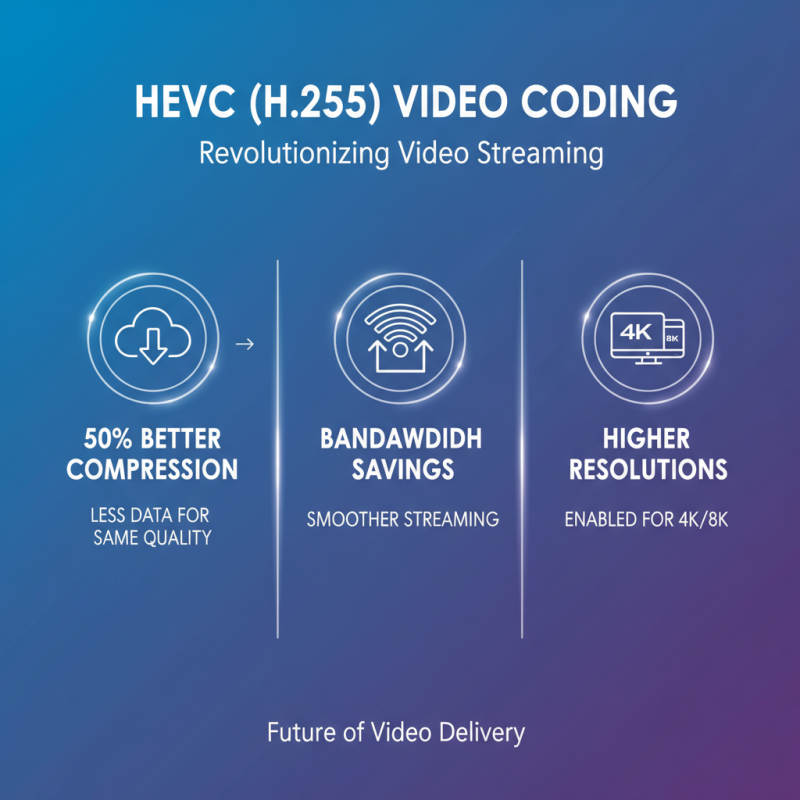
High Efficiency Video Coding (HEVC), also known as H.265, is a video compression standard developed to provide significantly improved video quality at much lower bit rates compared to its predecessor, H.264. According to the International Telecommunication Union (ITU), HEVC can reduce the data stream by approximately 50% while maintaining the same level of video quality, making it an ideal solution for the growing demand for high-resolution video content in various streaming platforms.
The adoption of HEVC is increasingly driven by the rise of 4K and 8K video content, which requires large amounts of data to transmit and store. A report by the International Association of Broadcasting Manufacturers (IABM) indicates that by 2025, over 75% of all video traffic on the internet will be 4K or higher resolution. This growing trend necessitates efficient coding methods such as HEVC, which not only enables smooth streaming experiences but also reduces bandwidth costs for service providers and consumers alike.
In addition to bandwidth efficiency, HEVC supports a wide range of applications, including live broadcasting, Video Conferencing, and virtual reality, ensuring versatility in its usage. According to a research paper published by the Institute of Electrical and Electronics Engineers (IEEE), the implementation of HEVC has resulted in improved user experiences, as viewers benefit from sharper images and reduced buffering, even in bandwidth-constrained environments. As the demand for high-quality video content continues to escalate, understanding and leveraging the fundamentals of HEVC becomes crucial for both content creators and consumers.
Key Features and Technical Specifications of HEVC
High Efficiency Video Coding (HEVC), also known as H.265, represents a significant advance over its predecessor, H.264, particularly in terms of compression efficiency and quality. One of the standout features of HEVC is its capability to deliver video content at a much lower bit rate without sacrificing quality. According to a report from the International Telecommunication Union (ITU), HEVC can reduce data requirements by approximately 50% compared to H.264. This enhancement is crucial for streaming services, especially as consumer demands for high-resolution content continue to grow.
From a technical standpoint, HEVC utilizes advanced coding tools and algorithms, such as larger coding tree units (CTUs), advanced motion vector prediction, and improved intra-frame prediction. These innovations allow for better utilization of bandwidth, enabling the streaming of 4K and even 8K content. The HEVC standard supports resolutions up to 8192x4320 pixels, making it a preferred choice for high-definition streaming. Reports indicate that as of 2021, the adoption of HEVC across various platforms has reached nearly 50%, demonstrating its increasing relevance in a rapidly evolving market where efficient video delivery is paramount.
Comparative Analysis: HEVC vs. Previous Video Coding Standards
High-Efficiency Video Coding (HEVC) (H.265), represents a significant advancement over its predecessors, delivering superior compression efficiencies that facilitate high-quality streaming even in bandwidth-constrained environments. When compared to earlier standards such as AVC (H.264), HEVC can achieve approximately double the data compression ratio while maintaining the same video quality. This capability is particularly beneficial for streaming services, where maintaining visual fidelity with minimal buffering is paramount. By utilizing more advanced coding techniques, HEVC offers not only improved compression but also support for higher resolutions, making it a preferred choice for 4K and beyond.
Further comparative analysis reveals that HEVC outperforms previous standards in several areas, including coding efficiency and the ability to handle complex 3D video content and HDR imagery. The codec uses advanced prediction algorithms and transforms, which enhances its ability to compress high-resolution video without significant loss of quality. Moreover, the increased complexity of HEVC means it requires more processing power, yet the benefits it offers in terms of network efficiency and user experience make it a worthwhile investment for content providers. Overall, the transition to HEVC signifies a pivotal shift in the landscape of video coding, enabling richer and more dynamic streaming experiences for users globally.
Quantifying the Bandwidth Savings Offered by HEVC
High Efficiency Video Coding (HEVC), also known as H.265, has revolutionized the way we stream video content by significantly reducing the amount of data required for high-quality video transmission. Unlike its predecessor, AVC (H.264), HEVC can compress video files by up to 50%, which translates into considerable bandwidth savings without sacrificing visual quality. This capability is particularly beneficial for streaming services that require efficient data management to cater to a diverse audience with varying internet speeds. By utilizing HEVC, providers can deliver higher resolutions, such as 4K and even 8K, while maintaining a smooth playback experience.
The quantification of bandwidth savings offered by HEVC reveals its profound impact on data consumption. For instance, streaming a 4K movie using HEVC can use significantly less data than using AVC, which is especially advantageous for users on limited data plans. Studies suggest that with HEVC, streaming with the same quality can consume nearly half the bandwidth when compared to previous coding standards. This efficiency not only enhances user experience by reducing buffering times but also lowers operational costs for service providers who manage extensive video libraries. In an era where online streaming demand continues to surge, the adoption of HEVC is becoming increasingly vital for sustainable and high-quality video delivery.
Impact of HEVC on Video Streaming Quality and Performance
High Efficiency Video Coding (HEVC), also known as H.265, represents a significant advancement in video compression technology, greatly impacting the quality and performance of Video Streaming. One of the most notable benefits of HEVC is its ability to reduce file sizes without compromising video quality. This improved compression efficiency allows for smoother streaming experiences, particularly in environments with limited bandwidth. By encoding video at half the data rate of its predecessor, HEVC enables viewers to enjoy high-definition content without the frustrating buffering that often accompanies traditional streaming methods.
Moreover, the impact of HEVC on video streaming quality is particularly evident in high-resolution formats, such as 4K and 8K content. As these formats become increasingly popular, HEVC addresses the challenge of delivering such demanding video streams seamlessly. It enhances the visual quality by maintaining clarity and detail even at lower bitrates, making it ideal for streaming services that seek to provide viewers with the best possible experience. The technology also supports a variety of complex video types, including 360-degree and virtual reality content, which require advanced compression techniques to transmit effectively. Overall, the adoption of HEVC in video streaming has paved the way for a new standard of quality and efficiency that benefits both content providers and viewers alike.
Impact of HEVC on Video Streaming Quality and Performance
Case Studies: HEVC Implementation in Major Streaming Platforms
High-Efficiency Video Coding (HEVC), also known as H.265, has been increasingly adopted by various streaming platforms, showcasing significant improvements in video quality and bandwidth efficiency. One prominent case study can be observed in live sports streaming, where platforms have leveraged HEVC to maintain high-definition visuals while minimizing buffering for viewers. By compressing data more efficiently than its predecessor, HEVC enables smoother transmission even in lower bandwidth conditions, ensuring that audiences experience high-quality streams during critical moments of a game or event.
Another example can be found in the realm of on-demand content. Many video streaming services have implemented HEVC to enhance the viewing experience for subscribers watching movies and series. The lower data rates provided by HEVC allow these services to offer higher resolution content, such as 4K and 8K videos, without overwhelming users’ internet connections. As a result, viewers enjoy sharper images and a more immersive experience, while platforms reduce infrastructure costs related to data transmission and storage. These implementations demonstrate how HEVC is reshaping the streaming landscape, paving the way for richer content delivery in an increasingly digital world.
Future Trends: The Evolution of Video Coding Beyond HEVC
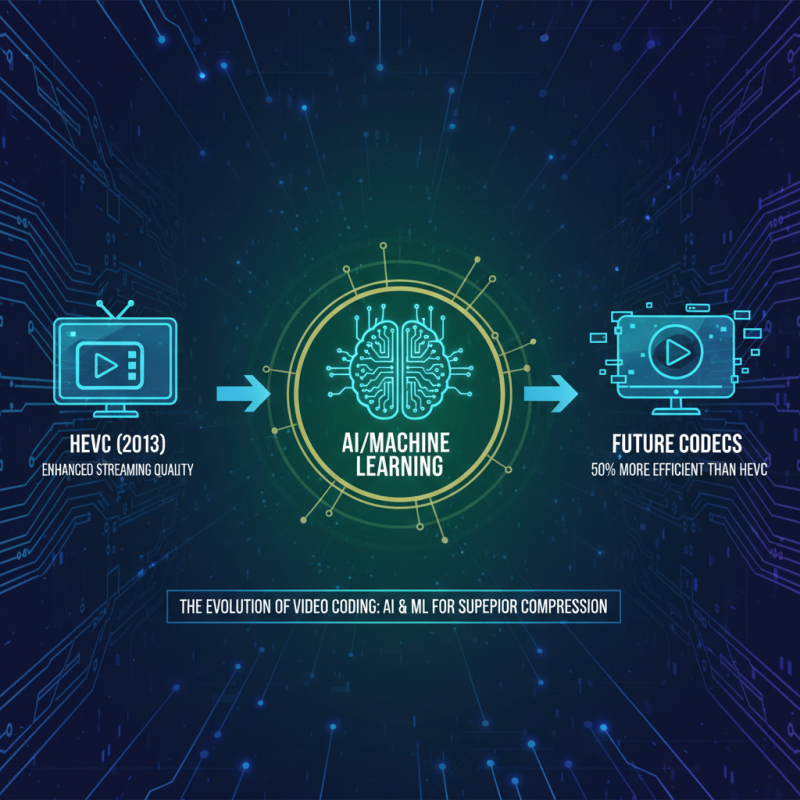
The evolution of video coding is continuously shaping the landscape of digital media, with High Efficiency Video Coding (HEVC) leading the charge in enhancing streaming quality. However, as technology progresses, the demand for even more efficient compression methods has emerged. Recent research projects that the industry will witness the emergence of video codecs that go beyond HEVC by utilizing artificial intelligence and machine learning for superior performance. Analysts predict that future video coding standards could achieve compression rates that are up to 50% more efficient than HEVC, significantly reducing bandwidth and storage requirements for content delivery.
A study from the International Telecommunications Union (ITU) indicates that video content is projected to account for over 82% of all consumer internet traffic by 2022. This staggering statistic highlights the necessity for advancements in video coding technologies. As the demand for higher resolutions and enhanced streaming experiences rises—particularly with the widespread adoption of 4K and now 8K content—the evolution towards more efficient coding methods is essential. Emerging codecs such as Versatile Video Coding (VVC) and AV1 are already positioned as key players in this domain, promising to support high dynamic range and a broader color gamut without burdening network infrastructures. As these advancements unfold, they will not only improve viewer experiences but also enable content providers to deliver richer media at lower costs.
Unlocking the Power of Video Storage: A Comprehensive Guide to XT Video Archive Companion Solutions
In the digital age, managing video files efficiently is paramount for individuals and businesses alike. The emergence of the Video Archive Companion Series marks a significant advancement in this arena. This innovative product line harnesses intelligent high-compression video technology, allowing users to store vast amounts of video content without compromising quality. The ability to compress video files drastically reduces storage requirements, enabling users to maximize their resources while maintaining the integrity of their media.
What's truly compelling about these solutions is the integration of non-real-time video file processing technology. This feature allows for smoother workflows, as users can process videos without the restrictions of real-time constraints. Whether it's for content creation, archiving, or broadcasting, the efficiency brought about by the Companion Series transforms how video data is managed. As a result, users can focus on creativity and productivity rather than being bogged down by the technicalities of file storage and organization. This comprehensive guide explores these revolutionary tools, paving the way for innovative video management solutions that meet the demands of today's dynamic media environment.
FAQS
: High Efficiency Video Coding (HEVC), also known as H.265, is a video compression standard that significantly reduces the data required for high-quality video transmission, allowing for efficient streaming and storage.
HEVC can compress video files by up to 50% more than AVC (H.264), resulting in substantial bandwidth savings while maintaining visual quality.
HEVC allows streaming services to deliver higher resolutions, such as 4K and 8K, while using less bandwidth, enhancing user experience and reducing operational costs.
Studies indicate that streaming with HEVC can utilize nearly half the bandwidth compared to AVC for the same video quality, making it crucial for users on limited data plans.
Future video coding standards are expected to utilize artificial intelligence and machine learning to achieve compression rates that are up to 50% more efficient than HEVC.
Video content is projected to comprise over 82% of all consumer internet traffic, highlighting the need for advancements in video coding technologies.
Emerging codecs such as Versatile Video Coding (VVC) and AV1 are being developed to provide improved efficiency and support for higher resolutions without overloading network infrastructures.
As demand for higher resolutions and better streaming experiences increases, advancements in video coding methods are essential to ensure efficient content delivery and enhance viewer experiences.
Newer codecs are expected to offer even greater compression efficiency, support high dynamic range, and a broader color gamut, allowing for richer media experiences while minimizing costs.
Utilizing HEVC reduces data consumption, which in turn lowers buffering times, resulting in a smoother playback experience for users.
Conclusion
Highefficiency Video Coding (HEVC) represents a significant advancement in video compression technology, enabling higher quality video at lower bitrates compared to previous standards. This article explores the fundamentals of HEVC, highlighting its key features and technical specifications that contribute to its efficiency. A comparative analysis with earlier coding standards reveals the substantial bandwidth savings achieved through HEVC, which directly impacts video streaming quality and performance.
Moreover, the implementation of Highefficiency Video Coding is examined through case studies of major streaming platforms, showcasing its advantages in real-world applications. Looking ahead, the article discusses future trends in video coding, suggesting that HEVC may be a stepping stone toward even more advanced solutions in the streaming landscape. Overall, Highefficiency Video Coding is poised to play a crucial role in enhancing the viewer experience while ensuring optimal use of network resources.